Wildlife Management by Ecoregions & Property Type
Texas is not one landscape—it’s many. From the limestone hills of Central Texas to the brush country of the south and the pine forests of the east, each region presents its own soils, rainfall patterns, plant communities, and wildlife challenges. That diversity is part of what makes land ownership in Texas so rewarding—and so complex.
For landowners seeking to qualify for or maintain a wildlife management valuation (commonly called the “wildlife exemption”), understanding this regional diversity is critical. Wildlife management in Texas is highly regional. A plan that succeeds in one ecoregion may fail in another. Rainfall averages can differ by more than 20 inches per year across the state. Native plant communities shift dramatically from shortgrass prairie to thornscrub to hardwood forest. Wildlife species composition changes just as dramatically.
We design wildlife management plans tailored to both ecoregion and property type, ensuring landowners meet state and wildlife appraisal region requirements. In addition, our plans ensure you are building healthy, resilient habitats that reflect your goals and the land’s natural character.
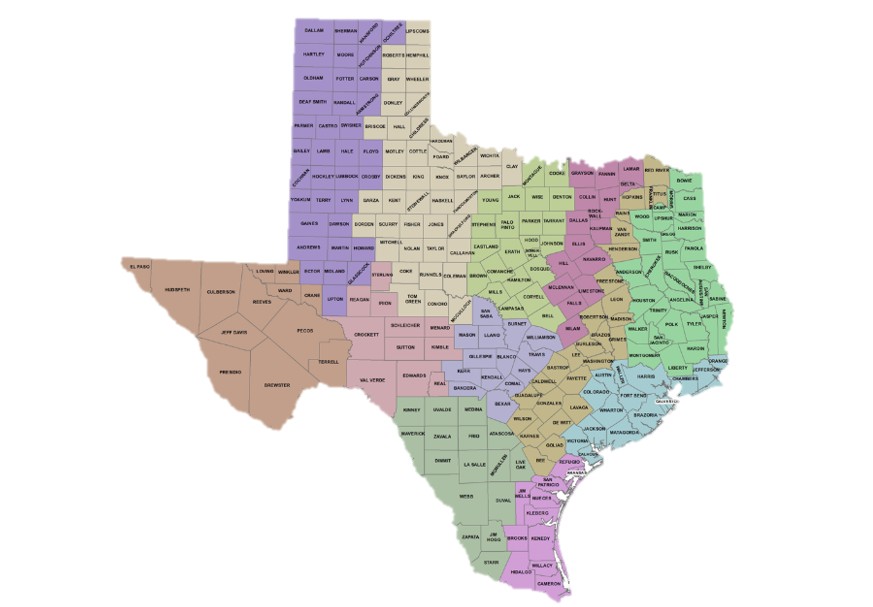
Why Wildlife Management Is Regional in Texas
The Texas Comptroller’s guidelines for wildlife management valuation require that landowners actively manage for native wildlife through practices such as:
- Habitat control
- Erosion control
- Predator management
- Providing supplemental water
- Providing supplemental food
- Providing shelter
- Conducting census counts
But how these practices are implemented depends entirely on where your property is located.
Rainfall patterns, soil types, native vegetation, brush density, and wildlife populations differ across Texas ecoregions. For example:
- In arid regions, water development may be the central focus.
- In wooded regions, invasive species control may be critical.
- In brush country, selective thinning may be the most important practice.
- In prairie systems, prescribed fire can be essential.
Effective wildlife management requires working with the ecological characteristics of your region—not against them. Below, we explore how management strategies vary across Texas’ major ecoregions.
Texas Hill Country
The Hill Country is one of the most recognizable regions in Texas. Characterized by limestone soils, rolling terrain, juniper and oak woodlands, and moderate rainfall, it supports species such as white-tailed deer, Rio Grande turkey, black-capped vireo, and golden-cheeked warbler.
Key Wildlife Management Considerations
1. Brush Management
Ashe juniper (commonly called cedar) often dominates Hill Country landscapes. While native, it can become overgrown, reducing plant diversity and suppressing grasses. Wildlife plans here often include selective cedar thinning to:
- Improve native grass production
- Enhance forb diversity for deer and turkey
- Reduce wildfire risk
- Improve watershed function
2. Water Development
Although rainfall is higher than in West Texas, drought cycles are common. Installing wildlife guzzlers or maintaining ponds can be essential.
3. Erosion Control
Steep slopes and thin soils make erosion a major concern. Proper road design, water diversion structures, and controlled grazing are critical.
4. Songbird Management
In certain counties, federally listed species require specialized habitat considerations. Plans may incorporate protected habitat zones and timing restrictions on clearing.
Hill Country plans must strike a balance between brush reduction and maintaining adequate cover—too much clearing can damage habitat, but too little can suppress diversity.
South Texas Plains
The South Texas Plains—often called “brush country”—is a semi-arid region known for dense thornscrub, mesquite, and cactus. Rainfall is lower, summers are hotter, and wildlife species differ significantly from Central Texas.
Key Wildlife Management Considerations
1. Water Is Everything
In this region, supplemental water development is often the cornerstone of a wildlife management plan. Troughs, guzzlers, and well-maintained ponds can dramatically influence wildlife distribution.
2. Selective Brush Sculpting
Unlike regions where brush is reduced, here the focus is often on brush diversity and structure. Complete clearing can harm wildlife. Instead, management emphasizes:
- Creating edge habitat
- Maintaining mixed-age brush stands
- Protecting mast-producing species
3. Quail Habitat Management
Scaled and bobwhite quail are iconic species here. Plans frequently incorporate:
- Native grass restoration
- Controlled disking
- Predator management
- Supplemental feeding (where appropriate)
4. Drought Resilience
Long-term drought planning is essential. Stocking rates and grazing pressure must be carefully aligned with rainfall.
In South Texas, management is about preserving and enhancing brush structure—not eliminating it.
Post Oak Savannah
Located between the Pineywoods and the Blackland Prairie, the Post Oak Savannah features sandy soils, open oak woodlands, and grasslands.
Key Wildlife Management Considerations
1. Invasive Species Control
Chinese tallow and other invasive species are growing concerns. Active removal and reestablishment of native grasses are often included in wildlife plans.
2. Prescribed Fire
Fire is a natural and necessary tool in this ecosystem. Where feasible and safe, prescribed burns improve habitat diversity and reduce woody encroachment.
3. Water & Wetland Enhancement
This region often supports small tanks and seasonal wetlands. Proper shoreline management enhances waterfowl and amphibian habitat. However, sandy soils can pond development can be problematic, so rainwater harvesting makes sense for many landowners interested in providing supplemental water.
4. Mixed Land Use Integration
Many properties in this region are smaller and part-time agricultural operations. Plans must integrate wildlife practices with hay production or light grazing. Livestock can work hand-in-hand with a wildlife exemption, and we can make that work for you.
Management in the Post Oak Savannah focuses heavily on restoring ecological balance between woodland and grassland. The diversity within and between these plant communities is also what makes it productive for wildlife.
Pineywoods
The Pineywoods of East Texas are dramatically different from the rest of the state. Higher rainfall, acidic soils, and dense forests define this region.
Key Wildlife Management Considerations
1. Forest Management
Timber thinning and sustainable forestry practices are central. Overcrowded stands reduce understory diversity and wildlife value.
2. Invasive Control
Chinese privet and tallow can quickly dominate understory layers. Active management is necessary to protect native plant communities.
3. Riparian Protection
Creeks and bottomland hardwood areas are common. Protecting stream banks and minimizing sediment runoff is essential.
4. Deer Herd Balance
Higher rainfall supports higher deer densities, making population control an important management practice.
In the Pineywoods, forestry expertise and wildlife management must work hand-in-hand.
Edwards Plateau
Often overlapping with the Hill Country, the Edwards Plateau has distinct soil and hydrology characteristics influenced by karst geology.
Management here frequently emphasizes:
- Aquifer protection through erosion control
- Deferred (no) grazing to protect recharge zones
- Native grass restoration
- Supplemental water sources compatible with karst terrain
Because of its ecological sensitivity, management must account for groundwater recharge and fragile soils.

Wildlife Management by Property Type
Ecoregion is only part of the equation. Property size and configuration also determine how a wildlife management plan should be structured.
Small Acreage (10–50 Acres)
Smaller tracts face unique challenges:
- Higher edge-to-interior ratio
- Neighboring land use impacts
- Limited room for extensive habitat manipulation
Effective strategies often include:
- Habitat control improvement, including brush management
- Nest boxes and artificial structures
- Supplemental water features
- Cooperative management with neighbors
Plans must be realistic and demonstrate meaningful effort despite acreage limitations.
Mid-Sized Properties (50–500 Acres)
These tracts offer greater flexibility and typically allow for:
- Brush management zones
- Wildlife food plots
- Rotational grazing systems
- Internal water distribution
Management plans can incorporate multiple practices across different habitat types. Census techniques (camera surveys, spotlight counts) become more meaningful at this scale.
Large Ranches (500+ Acres)
Larger properties allow for landscape-scale planning:
- Prescribed burn rotations
- Long-term brush sculpting programs
- Extensive supplemental water infrastructure
- Population-level wildlife management, such as surveys for deer
Here, data-driven management becomes especially important. Deer surveys, harvest data, and habitat monitoring form the backbone of a successful wildlife strategy.
Large properties also require compliance documentation at a higher level of detail, given the scope of activity.
Integrating Regional Ecology with Wildlife Exemption Requirements
The wildlife management valuation requires that land be actively managed for native wildlife at a level at least equal to previous agricultural intensity. This is not a one-size-fits-all process.
For example:
- In the South Texas Plains, adding water sources may meet intensity standards.
- In the Hill Country, cedar management and erosion control may demonstrate equivalent intensity.
- In the Pineywoods, forest thinning and invasive removal may be the dominant qualifying practices.
Each ecoregion requires different documentation, timelines, and management benchmarks.
The Importance of Custom Wildlife Management Plans
For Texas landowners seeking a wildlife exemption, a written wildlife management plan is a required and foundational part of the application process. The plan documents how the property will be actively managed to sustain native wildlife at a level of intensity equal to or greater than traditional agricultural use. It outlines specific practices—such as habitat control, supplemental water, erosion control, predator management, and population monitoring—and ties them directly to the property’s ecoregion and acreage.
Without a clear, site-specific management plan, an application is incomplete and unlikely to meet county appraisal district standards. A well-prepared plan not only supports approval but also provides a practical roadmap for long-term stewardship and compliance.
A strong wildlife management plan must:
- Reflect the ecological realities of the property.
- Align with wildlife appraisal region expectations.
- Meet State of Texas intensity standards.
- Be practical and achievable for the landowner.
Generic templates rarely succeed long-term. Wildlife management plans must be site-specific, regionally informed, and grounded in sound wildlife science.
Our Expertise Across Texas
Because wildlife management in Texas is highly regional, successful planning requires experience across multiple landscapes.
We work with landowners in:
- Limestone hills and karst recharge zones
- South Texas brush country
- Prairie restoration projects
- East Texas timberlands
- Mixed-use agricultural properties
Our management plans reflect:
- Regional plant communities
- Soil capability
- Suitable wildlife selected for management
- Rainfall variability
- Property size and configuration
- Long-term landowner goals
Whether you own a 15-acre retreat in the Hill Country or a multi-thousand-acre ranch in South Texas, your wildlife management plan should reflect the unique ecological identity of your land.
Building a Plan That Fits Your Land
Texas is ecologically diverse, and that diversity demands expertise. Wildlife management is not simply about qualifying for a tax valuation—it is about stewardship.
When properly designed, a wildlife management plan can:
- Improve habitat health
- Increase biodiversity
- Strengthen drought resilience
- Protect soil and water resources
- Enhance long-term property value
But it must be regionally appropriate and property-specific.
Understanding Texas ecoregions—and how wildlife management varies within them—is the foundation of responsible land stewardship and successful wildlife exemption compliance.

If you are considering transitioning to wildlife management or need to update your current plan, the first step is evaluating your property through the lens of its ecoregion and size. From there, we develop a practical, science-based plan designed specifically for your land.
Because in Texas, wildlife management isn’t generic.
It’s regionally-based and property-specific.