In Focus: Wildlife Exemption in Anderson County
Wildlife tax valuation plays an important role in Anderson County, where agriculture, timber, and open space remain central to the local economy and way of life. This special agricultural appraisal, often referred to as a wildlife exemption, allows landowners to have their property appraised based on its productive value for wildlife management rather than its market value.
In a county with rich East Texas ecosystems, this valuation is more than a tax policy—it is a tool that supports conservation, private land stewardship, and long-term economic stability.
Benefits of Wildlife Exemption & Habitat
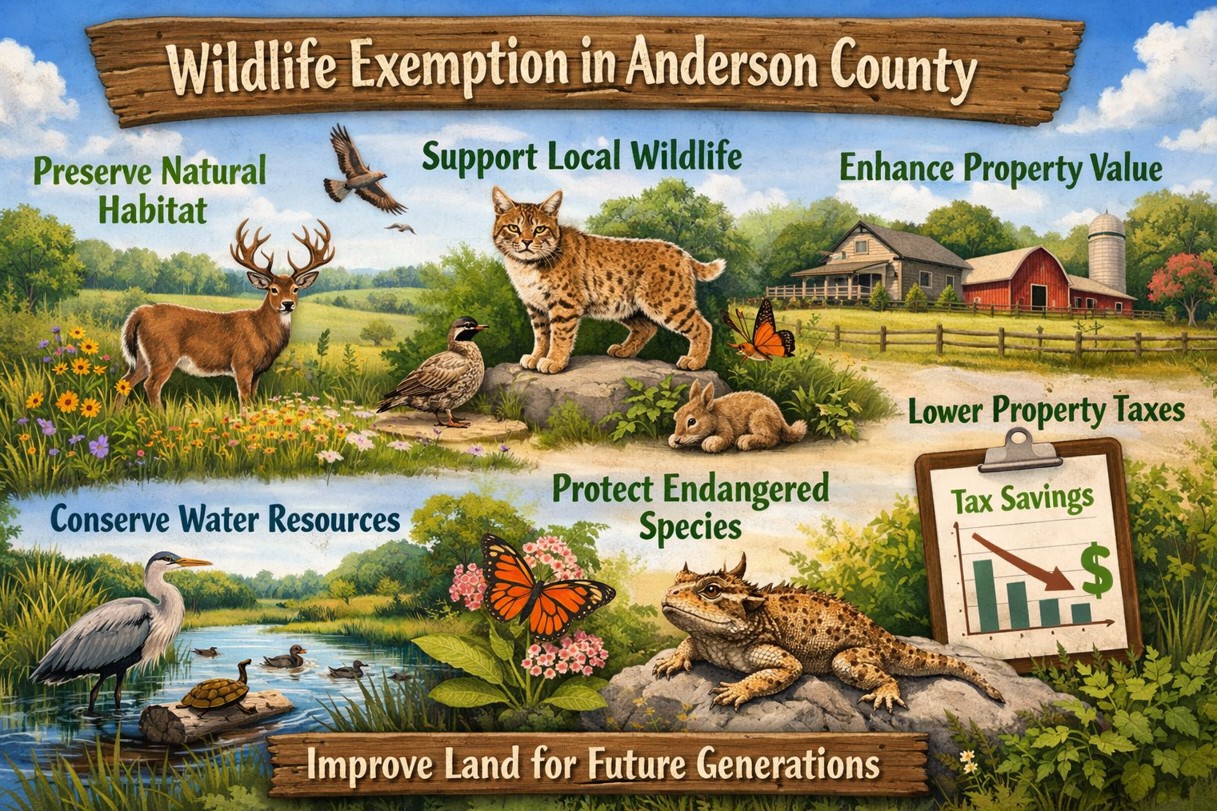
One of the most significant benefits of wildlife exemption is its positive impact on wildlife habitat. Anderson County is home to diverse species, including white-tailed deer, wild turkey, songbirds, pollinators, and numerous native plants. Wildlife valuation encourages landowners to actively manage their land for habitat improvement through practices such as native grass restoration, brush management, supplemental water, and erosion control.
These practices create healthier ecosystems that support not only game species but also non-game wildlife, improving biodiversity across the county. By incentivizing responsible land management, the county helps ensure that wildlife populations remain sustainable for future generations.
Benefits to Anderson County Landowners
Landowners are another major group that benefits from wildlife exemption in Anderson County. Property taxes can be a heavy burden, especially for families who own large tracts of rural land but do not generate high income from it. Wildlife tax valuation helps keep landownership affordable by maintaining tax liability while still requiring active, documented management.
This allows landowners to keep their land intact rather than feeling pressure to sell or subdivide it for development. As a result, family ranches, farms, and forestlands are more likely to stay in the hands of local residents who are invested in the long-term health of the land.
In addition, wildlife exemption offers flexibility for landowners. Unlike traditional agricultural activities, which may require livestock or crop production, wildlife management allows owners to shift their focus to conservation-oriented activities while still maintaining tax benefits.
This flexibility is especially valuable in Anderson County, where soil types, weather patterns, or market conditions may make traditional agriculture less viable on certain properties. Wildlife management allows landowners to adapt to changing conditions without sacrificing financial sustainability.

Positives of Wildlife Exemption in Anderson County
The county as a whole also benefits from wildlife tax valuation in meaningful ways. Preserving open space helps maintain the rural character of Anderson County and limits unchecked development that can strain infrastructure and public services. Roads, schools, and emergency services are less burdened when land remains undeveloped, which can help control long-term costs for taxpayers. At the same time, well-managed wildlife lands contribute to cleaner water, healthier soils, and reduced flooding, all of which have direct public benefits.
Wildlife exemption also supports the local economy. Hunting leases, wildlife tourism, and outdoor recreation bring revenue into the county, supporting local businesses such as feed stores, equipment suppliers, lodging, and restaurants. By promoting healthy wildlife populations and quality habitat, the county enhances its reputation as a destination for outdoor activities. This economic activity helps offset the reduced tax burden on individual properties and circulates money throughout the community.
Wildlife Management Good For All
From a long-term perspective, wildlife tax valuation encourages a culture of stewardship. Landowners participating in the program must follow a wildlife management plan and demonstrate ongoing efforts to improve habitat. This creates a partnership between private landowners and the county, aligning individual goals with broader conservation objectives. Over time, these cumulative efforts result in healthier landscapes that are more resilient to drought, invasive species, and other environmental challenges common to East Texas.

The wildlife exemption in Anderson County represents a balanced approach to land use policy. It supports wildlife conservation, helps landowners remain financially viable, and protects the county’s rural heritage and natural resources. By recognizing the value of land managed for wildlife, the county invests in environmental health, economic stability, and quality of life. As growth and development pressures continue across Texas, wildlife management of land remains an essential tool for ensuring that Anderson County’s land, wildlife, and communities can thrive together. Please contact us if we can assist you with a wildlife management plan for your Anderson County land.